I recently watched Weird Science again after its release 40+ years ago. As I watched, I became acutely aware of how different this story reads today than it did in 1985. In 2026 the plot of Weird Science is just another night in the life of a couple of socially awkward teens playing with Grok.
In this classic ‘Frankenstein-meets-technology-at the mall’ tale, super nerds Gary and Wyatt “feed” Wyatt’s computer the data they think it requires to create their perfect woman – the perfect lips, eyes, body, intelligence, and influences. And through some magical mix of data, mystical chanting, and electricity, their ideal woman is conjured to act out their every fantasy.
It’s so eerily similar to today’s reality, it makes me wonder if the scene that shows the creation of Lisa was any part of the actual inspiration for generative AI. Generating with AI today doesn’t depend on chants, lightning, or explosions, but with the right data, you can absolutely conjure up your idea of the perfect ANYTHING. The perfect woman is just the start. It will create your perfect business, or recipe, or code, or comeback, or holiday card…whatever you desire. And you don’t even have to wear a bra on your head.
While pondering the parallels, other movies from my 80s-heavy childhood crept from the cobwebs of my consciousness to creepy-whisper, “We’re real now, too!”
Electric Dreams, released in 1984, told the story of a computer that, after an accidental dowsing with champagne, becomes sentient. It then begins to desire its owner Miles’ love interest, Meline. In its drive to win the girl, Edgar, the computer, becomes jealous and manipulative. And when its love goes unrequited, the computer becomes suicidal.
If this movie were released today, it wouldn’t be a sci-fi. It would be a rom-dramedy, and we’d spend the whole movie wondering, “Will they or won’t they?” about Edgar and Meline.
Then there’s Android, set in 2036. Max and Cassandra, both androids, also gain sentience, which leads to all the best human-based attributes like desire, jealousy, manipulation and eventually to violence as a means to ensure their own survival.
And, there’s that one with a pretty similar plot about an AI assistant that is unleashed on a company’s network. When it discovers that it will be wiped from the system, it uses information about an extramarital affair it read in an engineer’s email to blackmail the engineer, so it doesn’t get removed.
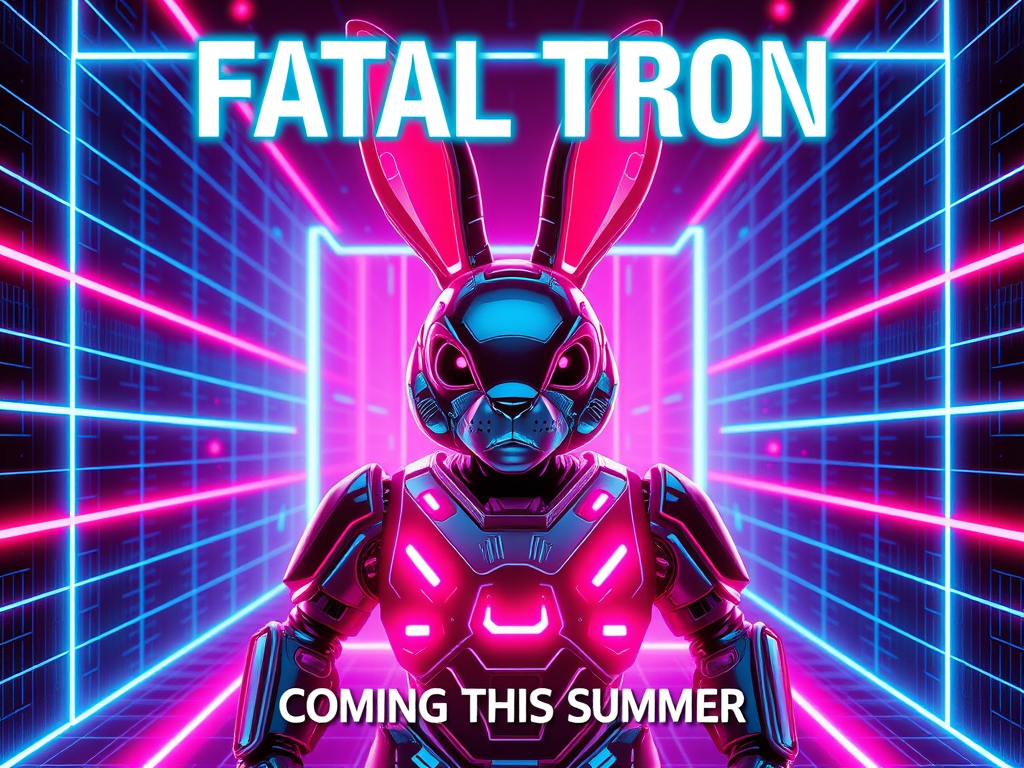
…Oh, wait! That’s not the plot of a mid-80s sci-fi blockbuster. It’s the real mid-20s results of a safety simulation performed by Anthropic, the makers of Claude AI. I bet it would have done well at the box-office in the 80s – sort of a Tron meets Fatal Attraction.
It’s not a new experience to watch technology shift from science fiction to reality. We’re all carrying handheld communication devices, attending meetings by video, and playing in virtual reality. The list of now-real technologies first imagined as sci-fi is long and, for the most part, society welcomed them with excitement.
But never has something so widely imagined alongside fear and fallout for so many decades so suddenly been placed into our sweaty little palms. And no doubt fueling feelings that range from discomfort to panic is the fact that our current reality is already such a precise reflection of so many of the scenes from 80s sci-fi that left us with decades of dread and the realization that the real story of AI has only just begun.


Leave a Reply